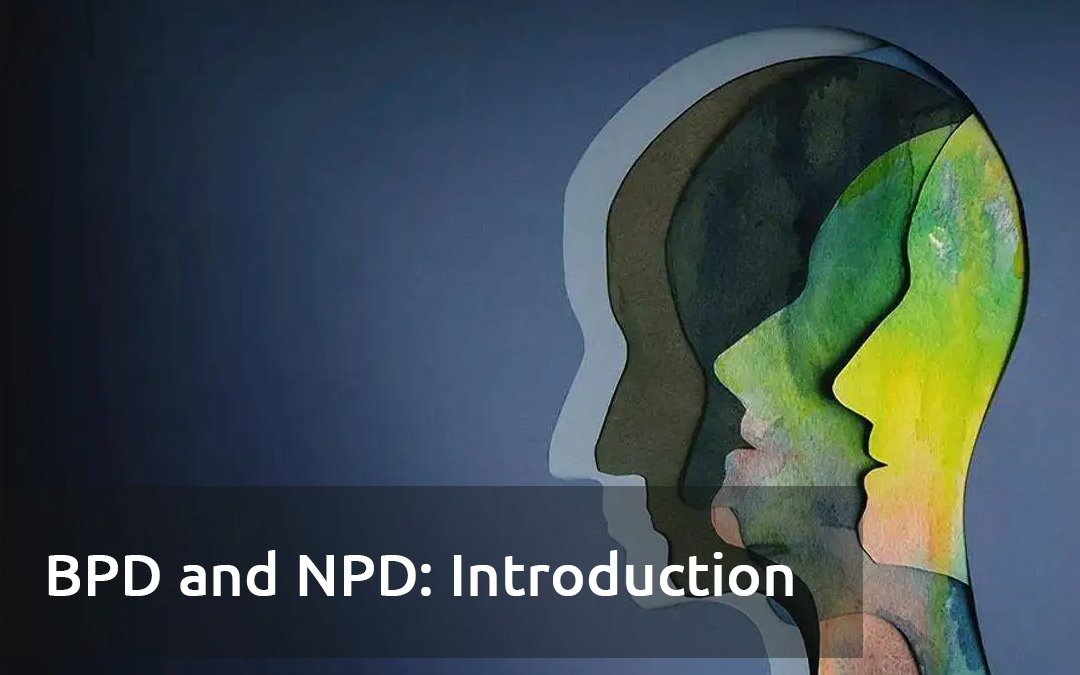
Over the past two decades, the terms borderline and narcissist[1] have increasingly circulated on social media. Both definitions, particularly the latter, have often been assigned rather inconsiderately to a broad range of behaviours, such as "arrogance, conceit, vanity, grandiosity, and self-centeredness."[2] As a result, these concepts have been gradually becoming less clear and increasingly blurred, and their clinical complexity is frequently trivialised or largely misunderstood.[3]
The problem with such a tendency is that the generalised and routine use of these serious terms turns them into labels or stigma. It subsequently creates an atmosphere of fear and alienation around these concepts, and individuals who genuinely struggle with emotional or interpersonal difficulties become reluctant to seek psychological support.
Even qualified psychotherapists who specialise in working with individuals with personality disorders require careful observation over time in order to reach an accurate diagnosis based on a specific set of criteria.[4] Therefore, the use of these terms has to be particularly careful and cautious.[5] The task for a Christian mentor is not to assign labels, express assumptions, or in any way attempt to diagnose,[6] but to discern the emotional and spiritual dynamics that affect a mentee's experience, encourage responsible self-understanding, and facilitate appropriate help-seeking when needed.
Core features of BPD and NPD
Even though BPD and NPD are from distinct diagnostic categories[7] and they, therefore, have considerable distinctions in their core underlying causes, inner motives and behavioural patterns, they share a number of notable similar characteristics. Both involve consistent difficulties with emotional regulation, profound fears of relational vulnerability, and a fragile self-concept or "identity diffusion,"[8] which usually begin in adolescence or early adulthood.[9] Both disorders can lead to intense and unstable relational dynamics that deeply affect emotionally and psychologically their spouses, children, parents, siblings and extended family members.[10] Those individuals who meet the criteria for one category, such as BPD, often display features of the other, such as NPD.
BPD-CAIs often experience rapid shifts in mood, endure deep fear of abandonment, have unstable self-image, together with intense and yet volatile relationships. Their emotional responses may sometimes be unreasonably abrupt and overly excessive. They may also demonstrate some rather rapid shifts between idealising and devaluing those whom they feel close to or depend on. Besides that, self-harm and suicidal threats or attempts may occur, particularly during periods of relational instability or loss.[11]
NPD-CAIs typically struggle with weak or impaired empathy, have fragile self-esteem, and demonstrate patterns of seeking admiration in order to maintain a sense of internal stability. Although they may act or speak as if they possess genuine confidence or entitlement, their emotional world and inner perception of themselves are often unstable and vulnerable. Consequently, perceived criticism, disapproval, or disrespect can trigger defensive reactions such as anger or withdrawal, which stem from what Kernberg describes as "hypersensitivity to any experienced criticism, real or fantasized."[12]
It is important to recognise that these patterns are not deliberate decisions or intentional choices. They are deeply ingrained psychological structures, typically developed in early childhood. Therefore, the role of a mentor is to recognise the relational patterns, respond with grounded compassion and understanding.
PBD and NPD are not mental illnesses
For the present discussion, it is important to underline that both BPD and NPD are classified as personality disorders, not as illnesses. The key difference between an illness and a personality disorder, is that the former typically implies that there is either an external pathogen (e.g. a virus, bacterium) or a temporary condition (with certain symptoms) which has a clear beginning and probable remission.[13] Personality disorders, however, are characterised by consistent and stable traits or patterns of thinking, feeling, and relating to oneself and others that develop over many years. Such patterns are usually stable, pervasive, and closely linked to the individual's sense of self. This is one of the primary reasons why personality disorders are generally not treated with medication. Such a particularity of BPD and NPD does not imply that they are less serious, but requires a different approach to treatment. Long-term psychological therapeutic sessions, consistent mentoring support, are considered more effective than medical care.
Causes and developmental background of BDP and NPD
Before approaching mentoring sessions, it is essential to recognise that both BPD and NPD largely originate in early childhood experiences, such as caregivers' neglect, absence or inconsistent presence, emotional invalidation, traumatic experiences, or attachment disruptions.[14] In some cases, children learn to adapt through emotional hypervigilance, compliance, or premature self-reliance. In others, they unconsciously developed strategies of self-protection that are later expressed as entitlement, detachment, or emotional volatility. As a result, both BPD and NPD are considered to be the results of early defence mechanisms that once helped these people survive in unsafe environments or adverse conditions. Understanding this developmental background is essential before approaching mentoring such individuals. As Linehan states, "the basis of the disordered 'borderline' behaviors [is] in "normal" responses to dysfunctional biological, psychological, and environmental events."[15] Obviously, it should not excuse or in any way justify harmful behaviour; however, it indicates that compassion and patience should be present.
The experience of B/NPD-RAIs
Those who live with someone with strong B/NPD traits, like spouses, children, parents, and siblings, often experience considerable emotional distress and cognitive dissonance. Such occurrences as emotional unpredictability, being idealised then suddenly devalued, enduring chronic conflict, blame shifting, gaslighting and emotional withdrawal can create significant confusion. Many B/NPD-RAIs speak about cycles of despair and then hope, which typically lead to cognitive dissonance, self-doubt, and a chronic state of anxiety.[16]
Another common side effect of staying in a close relationship of such a kind is trauma bonding. When a person is exposed to extreme emotional swings, ranging from painful rejection to intense closeness, such people may unconsciously form a pattern of strong emotional attachment that is difficult to break. Children growing up with such a parent may develop anxious or avoidant attachment styles, heightened hypervigilance, low self-esteem, or an excessive sense of responsibility for the parent's emotions and inner balance. Partners often experience burnout, exhaustion, and a gradual erosion of their own identity.[17] Such experiences can lead to secondary trauma and may require psychological counselling.
It is important for a Christian mentor, to be aware of these dynamics. The main task is to accompany a person on their spiritual journey and to cultivate an environment of safety and openness in which the individual can reflect on their relational patterns in light of biblical teaching and psychological insight, reassuring and affirming that God's grace extends both to those who suffer and to those impacted by their behaviour.
References:
[1] The terms refer to Borderline Personality Disorder (BPD) and Narcissistic Personality Disorder (NPD), respectively.
[2] W. Keith Campbell and Jean Twenge, The Narcissism Epidemic (New York: Atria, 2009), 23.
[3] John G. Gunderson and Perry Hoffman, eds., Understanding and Treating Borderline Personality Disorder (Washington, DC: American Psychological Association, 2005), 96.
[4] American Psychiatric Association, Diagnostic and Statistical Manual of Mental Disorders, 5th edition, text revision (Arlington, VA: American Psychiatric Association Publishing, 2022), 735.
[5] John Gunderson, Borderline Personality Disorder, 2nd ed. (Arlington, VA: American Psychiatric Association Publishing, 2009), 22, https://www.perlego.com/book/4275954
[6] American Association of Christian Counselors, AACC Christian Counseling Code of Ethics (2014), 35-36.
[7] American Psychiatric Association, DSM-5-TR, 733.
[8] Otto Kernberg, Treatment of Severe Personality Disorders (Arlington, VA: American Psychiatric Association Publishing, 2018), 10, https://www.perlego.com/book/4276114.
[9] American Psychiatric Association, DSM-5-TR, 733.
[10] Harriet P. Lefley, "From Family Trauma to Family Support System," in Understanding and Treating Borderline Personality Disorder, ed. John G. Gunderson and Perry Hoffman (Washington, DC: American Psychological Association, 2005), 131.
[11] Barbara Stanley and Beth S. Brodsky, "Suicidal and Self-Injurious Behavior in Borderline Personality Disorder: A Self-Regulation Model," in Understanding and Treating Borderline Personality Disorder, ed. John G. Gunderson and Perry Hoffman (Washington, DC: American Psychological Association, 2005), 43.
[12] Otto Kernberg, Treatment of Severe Personality Disorders (Arlington, VA: American Psychiatric Association Publishing, 2018), 161, https://www.perlego.com/book/4276114
[13] Theodore Millon et al., Personality Disorders in Modern Life, 2nd ed. (Hoboken, NJ: Wiley, 2012), "Personality and the Medical Model: A Misconception," https://www.perlego.com/book/1006247
[14] Kernberg, Treatment of Severe Personality Disorders, 9.
[15] Marsha Linehan, Cognitive-Behavioral Treatment of Borderline Personality Disorder (New York: The Guilford Press, 1993), https://www.perlego.com/book/4404574.
[16] Randi Kreger and Paul T. Mason, Stop Walking on Eggshells (Oakland, CA: New Harbinger Publications, 2020), 84, 131, https://www.perlego.com/book/4307626.
[17] Patrick Carnes, The Betrayal Bond: Breaking Free of Exploitive Relationships (Deerfield Beach, FL: Health Communications, 1997), 96.
Comment
Disclaimer Note
Key Terms and Abbreviations
B/NPD – Borderline and Narcissistic Personality Disorders;
CAIs – Core-affected individuals;
RAIs – Relationally-affected individuals.